
Pharmaceutical Cold Chain Logistics in Denver: Temperature Requirements for Vaccines and Medical Freight
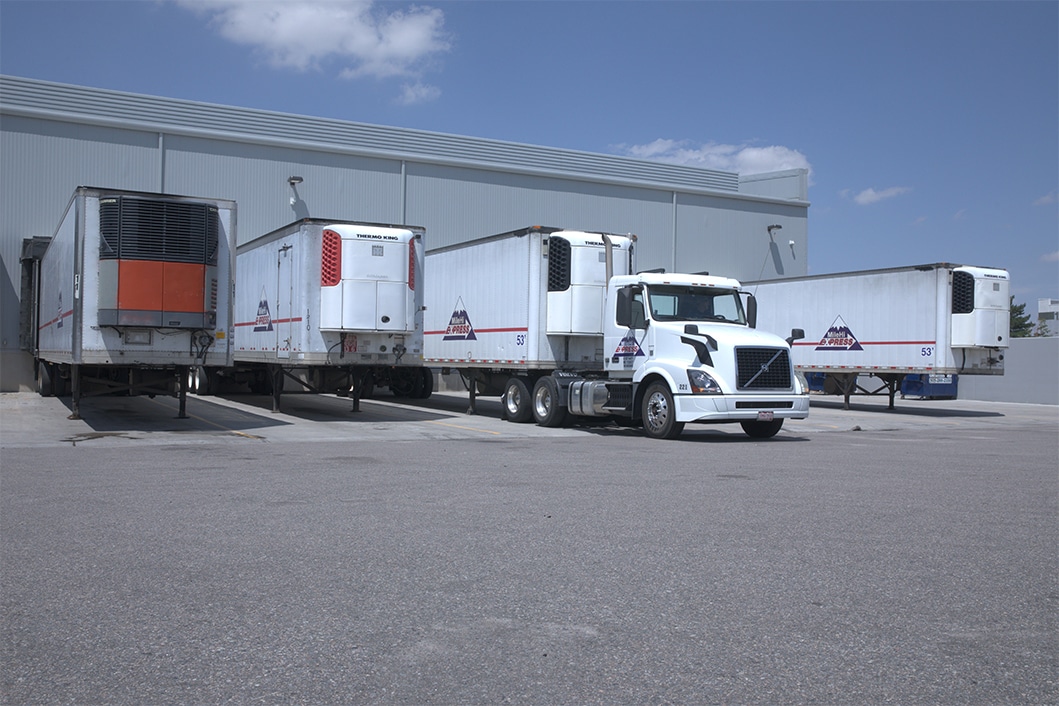
Pharmaceutical cold chain logistics keeps vaccines and medical freight within strict temperature ranges from warehouse to delivery. Per CDC guidance, refrigerated vaccines must stay between 2 and 8 degrees Celsius (36 to 46 degrees Fahrenheit), frozen products between minus 50 and minus 15 degrees Celsius, and ultra cold products between minus 90 and minus 60 degrees Celsius. Mile Hi Express provides refrigerated and frozen storage, LTL trucking, and cold chain delivery across Denver and the Front Range from its Aurora facility. Call 303-296-8465 for cold chain logistics service in Denver, CO.
A single break in the cold chain can turn a pallet of vaccines or specialty medications into a total loss. That is why pharmaceutical cold chain logistics is one of the most demanding categories of freight in the Denver metro, and why choosing the right cold chain logistics service matters as much as the product itself. This guide explains the exact temperature requirements for vaccines and medical freight, the compliance standards that govern them, and how Mile Hi Express supports temperature sensitive distribution across Denver and the Front Range of Colorado from its refrigerated facility in Aurora.
What Is Pharmaceutical Cold Chain Logistics?
Pharmaceutical cold chain logistics is the unbroken sequence of temperature controlled storage, handling, and transportation that keeps medications, vaccines, biologics, and diagnostic materials within their required temperature range from the manufacturer to the point of use. Unlike ambient freight, cold chain freight has no margin for improvisation. Every touchpoint, from the loading dock to the reefer trailer to the receiving cooler, must hold a validated temperature, and every handoff must be documented.
The term cold chain covers more than pharmaceuticals. Food, floral, and chemical products all move through temperature controlled supply chains. But pharmaceutical cold chain logistics carries the highest stakes and the tightest documentation requirements, because product potency, regulatory compliance, and patient access all depend on it. If you have ever searched for a cold chain logistics service or cold chain logistics near me in the Denver area, understanding the temperature tiers below is the best place to start.
What Temperature Ranges Do Vaccines and Medical Freight Require?
The CDC defines three storage tiers for vaccines: refrigerated at 2 to 8 degrees Celsius (36 to 46 degrees Fahrenheit), frozen at minus 50 to minus 15 degrees Celsius (minus 58 to plus 5 degrees Fahrenheit), and ultra cold at minus 90 to minus 60 degrees Celsius (minus 130 to minus 76 degrees Fahrenheit). These same tiers shape how medical freight moves through warehouses and trucks across the country, including here in Colorado.
- Refrigerated (2 to 8 degrees C): most routine vaccines, insulin, and many biologics. The CDC recommends a target of about 5 degrees Celsius to reduce excursion risk.
- Frozen (minus 50 to minus 15 degrees C): varicella containing vaccines and certain frozen formulations that must never thaw in transit.
- Ultra cold (minus 90 to minus 60 degrees C): select mRNA products and advanced biologics that ship in specialized containers with dry ice replenishment.
Two details make these ranges unforgiving. First, the CDC warns that a single exposure to freezing temperatures can permanently destroy the potency of many refrigerated vaccines. Second, appearance is not a reliable indicator of damage; a compromised vial can look completely normal. That is why documented, continuous temperature control matters more than any visual inspection. The full requirements are published in the CDC Vaccine Storage and Handling Toolkit, which is the reference standard for providers and logistics partners alike.
Why Is Cold Chain Logistics So Important for Denver Businesses?
Denver sits at the center of one of the fastest growing life sciences regions in the country, and roughly 90 percent of Colorado’s bioscience firms operate along the Front Range. The state’s life sciences ecosystem employs approximately 41,000 people, anchored by the Anschutz Medical Campus and Fitzsimons life science district in Aurora, according to the Colorado Office of Economic Development and International Trade. CBRE ranks the Denver and Boulder region among the top 20 global hubs for life sciences research. Every one of those laboratories, pharmacies, clinics, and distributors depends on cold chain logistics to receive and ship temperature sensitive product.
Geography raises the difficulty. The Denver metro sits a mile above sea level, where intense summer sun, rapid day to night temperature swings, and hard winter freezes can all occur within a single delivery week. A trailer that performs fine at sea level in mild weather faces a harder duty cycle on the Front Range, where ambient conditions can swing from below freezing to summer heat extremes across the seasons. Local carriers that maintain their reefer fleets for these conditions, and drivers who know the region’s docks and schedules, are a real operational advantage for Denver shippers.
What Does a Compliant Pharmaceutical Cold Chain Look Like?
A compliant pharmaceutical cold chain pairs validated equipment with continuous monitoring and complete documentation at every step. Regulators and industry standards, including FDA distribution requirements and good distribution practice principles, expect shippers and carriers to demonstrate control rather than assume it. In practice, a compliant chain includes these steps:
- Pre-cooled equipment: trailers and storage rooms are brought to the target temperature before product is loaded, never after.
- Calibrated monitoring: digital data loggers and sensors record temperatures continuously, and the CDC recommends retaining temperature logs for at least three years.
- Documented handoffs: each transfer between facility, dock, and vehicle is logged so there is a complete chain of custody from origin to destination.
- Excursion protocols: if a reading leaves the acceptable range, the product is quarantined and the event is documented until viability is confirmed by the manufacturer or the relevant authority.
- Trained handlers: dock crews and drivers understand which products they are carrying, what range applies, and what to do when something looks wrong.
For a deeper look at the federal rules governing prescription drug distribution, the FDA Drug Supply Chain Security Act overview outlines the traceability requirements that manufacturers, wholesalers, and their logistics partners work within.
How Does Mile Hi Express Support Cold Chain Logistics in Denver?
Mile Hi Express provides refrigerated and frozen storage, LTL trucking, pool distribution, cross docking, and redelivery services for temperature sensitive freight across Denver and the Front Range. The company operates from a modern cold storage facility at 12550 E. 33rd Ave in Aurora, minutes from the I-70 corridor and the heart of the region’s medical and distribution footprint, and has built long standing relationships with the area’s distributors and pharmaceutical companies.
Refrigerated and Frozen Storage
Temperature controlled refrigerated and frozen storage gives Denver shippers a compliant staging point between inbound linehaul and final delivery. Product stays within its required range while inventory is verified, sorted, and scheduled for delivery.
Refrigerated LTL and Pool Distribution
Medical freight rarely fills a full trailer. Refrigerated and frozen pool distribution and LTL delivery let multiple shippers share temperature controlled trailer space, so smaller shipments move efficiently without compromising the cold chain.
Cold Chain Delivery and Redelivery
When a national carrier’s freight arrives in Denver but the receiver cannot take it, Mile Hi Express steps in with LTL redelivery services along the Front Range, keeping product cold and appointments on schedule. Learn more about the company’s approach in its overview of reliable cold chain delivery services.
GPS Tracking and Temperature Logs
Every temperature sensitive load is supported by GPS tracking and detailed temperature logs, giving shippers the documentation trail that regulators and quality teams expect.
Need a cold chain logistics service in Denver?
Mile Hi Express stores and delivers refrigerated and frozen freight across the Front Range. Call 303-296-8465 or request a quote online to get started
What Should You Look for in a Cold Chain Logistics Service Near You?
The right cold chain partner proves temperature control with equipment, monitoring, and documentation, not promises. If you are comparing providers for cold chain logistics near me in the Denver area, evaluate each one against this checklist:
- Temperature capability that matches your product: refrigerated, frozen, or both, with storage and transport under the same roof.
- Continuous monitoring with calibrated sensors and temperature logs you can request at any time.
- Local coverage of your delivery footprint, including metro Denver, the northern Front Range, and Colorado Springs and Pueblo to the south.
- LTL and pool distribution options so you are not paying for empty trailer space.
- Cross docking and redelivery capability for freight that arrives off schedule.
- A physical local facility you can visit, not just a dispatch phone number.
Where Do Cold Chains Most Often Fail?
Most cold chain failures happen at handoffs: the dock, the dwell, and the door. Product sitting on an ambient dock while paperwork is sorted, a trailer door opened repeatedly across a long multi stop route, or a delayed receiver with no cold storage backup are all common failure points. Each one is preventable with the right process:
- Dock dwell: staging freight in refrigerated cross dock space instead of on an ambient dock removes the most common excursion window.
- Route design: consolidated pool distribution reduces door openings per shipment compared to long ad hoc multi stop routes.
- Receiver delays: local refrigerated storage and redelivery capacity means a missed appointment becomes a rescheduled delivery, not a lost shipment.
Why Do Denver Shippers Choose Mile Hi Express?
Denver businesses choose Mile Hi Express because it combines local knowledge, temperature controlled infrastructure, and a single point of accountability for storage and delivery. The team knows the region’s distribution centers, dock scheduling, and appointment systems, which keeps temperature sensitive freight moving instead of waiting. From refrigerated trucking services in Denver to storage, cross docking, and redelivery across the Front Range, the goal is simple: your product arrives at the right temperature, on time, with the paperwork to prove it.
Frequently Asked Questions (FAQs)
What is pharmaceutical cold chain logistics?
Pharmaceutical cold chain logistics is the temperature controlled storage, handling, and transportation of medications, vaccines, and other medical products from the manufacturer to the point of use. It relies on refrigerated warehouses, refrigerated trucks, continuous temperature monitoring, and documented handling procedures to keep products within their required temperature range at every step.
What temperature do vaccines need to be stored and shipped at?
According to CDC guidance, most refrigerated vaccines must be kept between 2 and 8 degrees Celsius (36 to 46 degrees Fahrenheit). Frozen vaccines require minus 50 to minus 15 degrees Celsius (minus 58 to plus 5 degrees Fahrenheit), and certain ultra cold products must stay between minus 90 and minus 60 degrees Celsius. The correct range depends on the specific product, so always follow the manufacturer label and CDC storage guidance.
What happens if a pharmaceutical shipment goes out of its temperature range?
A temperature excursion can reduce or permanently destroy product potency. The CDC notes that a single exposure to freezing temperatures can ruin many refrigerated vaccines, and appearance alone cannot confirm whether a product is still viable. Excursions must be documented, and affected products are typically quarantined until the manufacturer or public health authority confirms whether they remain usable.
Does Mile Hi Express handle pharmaceutical cold chain logistics in Denver?
Yes. Mile Hi Express provides refrigerated and frozen LTL trucking, cold storage, cross docking, pool distribution, and redelivery services for temperature sensitive freight across Denver and the Front Range, and has built long standing relationships with distributors and pharmaceutical companies in the region. Call 303-296-8465 to discuss the temperature requirements for your freight.
What is the difference between refrigerated, frozen, and ultra cold storage?
Refrigerated storage holds products between 2 and 8 degrees Celsius, frozen storage holds products between minus 50 and minus 15 degrees Celsius, and ultra cold storage holds products between minus 90 and minus 60 degrees Celsius. Each tier uses different equipment, monitoring probes, and handling procedures, which is why your logistics partner needs to know the exact requirement for every product they carry.
How is temperature monitored during cold chain transport?
Modern cold chain carriers use calibrated digital temperature sensors and GPS tracking on refrigerated trailers, paired with documented temperature logs. This creates a continuous record from pickup through delivery, which supports both product quality and regulatory compliance. Mile Hi Express uses GPS tracking and detailed temperature logs on its refrigerated fleet.
What areas does Mile Hi Express serve for cold chain logistics?
Mile Hi Express serves Denver and the entire Front Range of Colorado from its Aurora facility at 12550 E. 33rd Ave, including Aurora, Lakewood, Westminster, Thornton, Arvada, Broomfield, Commerce City, Englewood, Littleton, Longmont, Greeley, Colorado Springs, and Pueblo.
What is refrigerated LTL shipping and why does it matter for medical freight?
Refrigerated LTL (less than truckload) shipping lets you pay for only the trailer space your freight needs instead of booking a full truck. For medical distributors moving smaller, high value shipments to clinics, pharmacies, and hospitals across the Denver metro, LTL keeps distribution efficient without sacrificing temperature control.
How does Denver weather affect cold chain logistics?
Denver sits at high elevation and experiences intense summer heat, rapid temperature swings, and hard winter freezes, sometimes within the same week. Both heat and unplanned freezing can damage temperature sensitive products, so Denver shippers need carriers with well maintained reefer equipment, trained drivers, and monitoring that works in every season.
How do I get a quote for cold chain logistics near me?
If you are looking for a cold chain logistics service near Denver, call Mile Hi Express at 303-296-8465 or request a quote through the contact page at milehiexpress.com. Share your product type, temperature range, volume, and delivery points, and the team will build a storage and delivery plan around your requirements.
Get Cold Chain Logistics in Denver, CO
Whether you are moving vaccines through a distribution network or delivering refrigerated medical freight to clinics across the metro, Mile Hi Express is ready to help with cold chain logistics built for Denver and the Front Range. Call 303-296-8465 to speak with the team, or contact Mile Hi Express online to request a quote for cold chain storage, LTL delivery, or pool distribution today.