
Multi-Temp Trailers Explained: Shipping Frozen and Chilled Goods Together
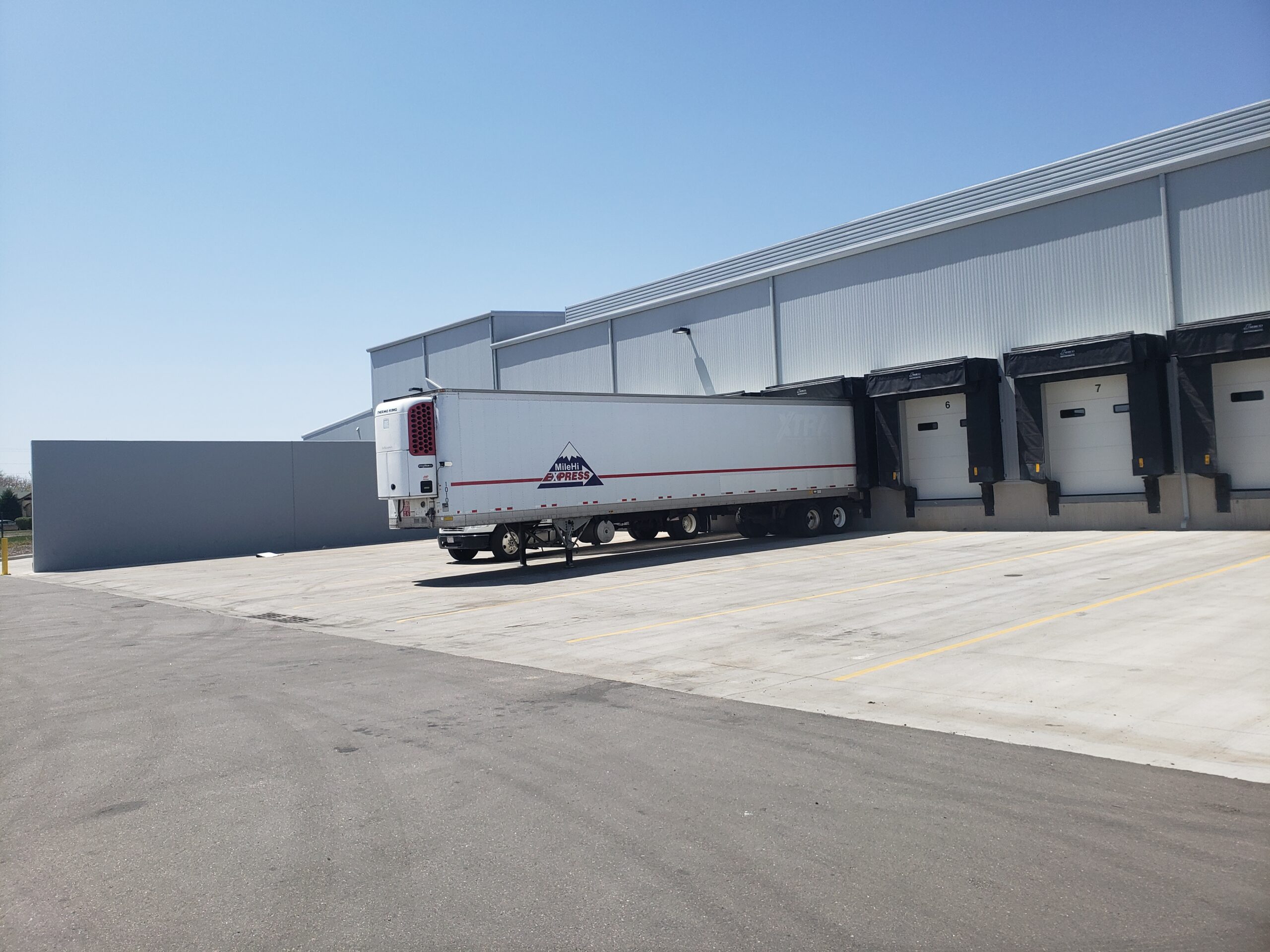
A multi-temp trailer is a refrigerated trailer split by insulated bulkheads into two or three independently controlled compartments, so frozen product can ride at 0 degrees Fahrenheit in one zone while chilled product rides between 33 and 40 degrees Fahrenheit in another, on the same trip. It removes the second truck from mixed grocery and food service loads. It also costs cubic capacity, adds equipment that can fail, and is not always the right answer for a Denver shipper moving a few frozen pallets alongside a larger chilled order. This guide explains how the equipment works, what the FDA requires of a mixed load, why altitude and the I-70 corridor change the math in Colorado, and what to do when a dedicated multi-zone trailer is more trailer than your freight needs.
If you have ever loaded ice cream and fresh lettuce onto the same truck and hoped for the best, you already understand the problem multi-temp trailers were built to solve. One setpoint cannot serve both. Hold the box at 0 degrees Fahrenheit and the lettuce is ruined. Hold it at 36 degrees Fahrenheit and the ice cream is a liability before it reaches the dock.
Multi-temp trailers, sometimes called multi-zone or split-temp reefers, give each part of the load its own climate. For restaurant supply, convenience store distribution, grocery replenishment, and mixed food service orders across the Denver metro, that capability is the difference between one delivery and two. Below is a working explanation of the equipment, the temperature science, the federal recordkeeping that applies the moment frozen and chilled share a trailer, and the Colorado-specific factors that shippers in flatter states never have to think about.
What Is a Multi-Temp Trailer and How Does It Work?
A multi-temp trailer is a refrigerated trailer whose cargo space is divided by insulated bulkheads into two or three compartments, each served by its own evaporator and each holding its own setpoint. One refrigeration unit sits on the nose of the trailer and feeds refrigerant to every zone, but each zone has an independent evaporator coil, independent airflow, and an independent temperature controller with its own logging channel.
The physical split can be arranged two ways. A front-to-back layout uses a movable bulkhead that can be repositioned to change the size of each zone by load. A side-by-side layout uses a fixed center divide so both zones stay reachable from the rear doors, which matters on multi-stop routes where the driver is offloading pallets at four or five receivers in sequence.
Everything else about the trailer is familiar reefer equipment. The insulation package, the airflow chutes, the return-air sensor placement, and the diesel or electric transport refrigeration unit are the same components described in our guide to how refrigerated trucks work. The bulkhead and the second evaporator are the only real additions, and they are also the two things most likely to be the source of a temperature complaint.
What Temperatures Do Frozen and Chilled Goods Actually Need?
Frozen food generally moves at 0 degrees Fahrenheit or colder, while chilled and refrigerated food typically runs between 33 and 40 degrees Fahrenheit. Those are reference ranges, not universal rules. The controlling number is always the operating temperature your shipper specifies in writing for that specific commodity.
| Product Group | Typical Transit Range | What Goes Wrong Outside It |
| Ice cream and frozen novelties | Around minus 10 degrees Fahrenheit | Heat shock, ice crystal growth, grainy texture, shrunken packages |
| Frozen proteins, fries, bakery | 0 degrees Fahrenheit or colder | Partial thaw and refreeze, freezer burn, rejected load at the dock |
| Fresh dairy, deli, packaged meat | 33 to 38 degrees Fahrenheit | Accelerated spoilage above range, freeze damage below it |
| Produce, most items | 34 to 40 degrees Fahrenheit | Chill injury on sensitive items, wilting, condensation damage |
| Chill-sensitive produce (bananas, tomatoes) | Warmer than 50 degrees Fahrenheit in many cases | Chilling injury, failure to ripen, surface pitting |
| Ambient or dry goods riding along | No refrigeration required | Condensation if staged next to a cold zone without separation |
Two points get missed constantly. First, cold food is a time-and-temperature control for safety issue under the FDA Food Code, which means holding temperature is a documented food safety condition and not a quality preference. Second, a reefer unit is designed to maintain a temperature, not to pull one down. Freight must be loaded at its correct temperature and the trailer must be pre-cooled before the doors open. If warm product goes in, the unit spends the whole trip losing a fight.
Multi-Temp vs. Single-Temp Reefer: Which Fits Your Load?
Choose a single-temp trailer when the entire load shares one setpoint, and a multi-temp trailer when the load genuinely splits into two climates with enough volume in each to justify the zone. The comparison below is the decision most food shippers are actually making.
| Factor | Single-Temp Reefer | Multi-Temp Reefer |
| Setpoints available | One across the whole box | Two or three, independently controlled |
| Usable cubic capacity | Maximum | Reduced by bulkheads, ducting, second evaporator |
| Payload weight | Higher | Lower, zone hardware adds weight |
| Best fit | Uniform full truckload: produce, frozen meat, dairy, floral | Mixed grocery, restaurant supply, convenience store replenishment |
| Loading complexity | Straightforward | Zone assignment and stop sequence must be planned before loading |
| Failure exposure | One unit, one zone affected | One unit, all zones affected if the compressor goes down |
| Documentation | One temperature record | Separate record per zone, per shipper specification |
| When it is overkill | Rarely | When one zone would carry only a pallet or two |
That last row deserves attention because no equipment vendor will tell you about it. A multi-zone trailer running three frozen pallets in a zone sized for ten is an expensive way to move three pallets. At that point the better structure is consolidation, which we cover further down.
Have a mixed frozen and chilled load headed into the Denver metro?
Send us your pallet counts, your temperature requirements by product group, and your consignee list. Mile Hi Express will map the zones, the staging, and the appointments. Call 303-296-8465 or request a quote online.
What Does FSMA Require When You Ship Frozen and Chilled Together?
Under the FDA Sanitary Transportation of Human and Animal Food rule, the shipper must specify operating temperatures in writing, the carrier must pre-cool equipment and maintain those conditions, and temperature records must be kept for twelve months. On a mixed load, every one of those obligations applies separately to every zone.
The rule, codified at 21 CFR Part 1 Subpart O, replaced an era in which a verbal understanding that the truck would be cold was considered sufficient. It is not. In practice, a compliant mixed load looks like this:
- Written specification per zone. The frozen setpoint and the chilled setpoint are both documented before the freight moves, not reconstructed afterward.
- Pre-cool verification. Each compartment is brought to its setpoint before loading begins, and that is confirmed rather than assumed.
- Independent logging per zone. A single trailer-level temperature record does not demonstrate that the frozen compartment held 0 degrees Fahrenheit while the chilled compartment held 36.
- Twelve-month retention. Records must be retrievable when a receiver, an auditor, or the FDA asks, which is usually long after the load delivered.
- Stop-shipment on a suspected failure. If anyone in the chain becomes aware of a possible temperature control failure, the affected food is not to be sold or distributed until a safety determination is made.
Mile Hi Express runs GPS tracking and trailer temperature logging on all equipment, and our post on food safety, GPS tracking, and temperature logs walks through what those records look like when a receiver asks for them. Carriers also have to weigh the federal hours-of-service limits against a multi-stop mixed route, because the delivery sequence and the temperature plan are the same plan.
Why Do Altitude and Colorado Weather Change the Math on Multi-Temp Loads?
Because a transport refrigeration unit works measurably harder at elevation, and Denver’s swing between a hot afternoon and a freezing night puts both zones under stress on the same day. This is the part of multi-temp shipping that national guides skip entirely.
Thin Air and Deep-Frozen Setpoints
Denver sits at roughly 5,280 feet, and the freight moving through it frequently climbs much higher. A diesel refrigeration unit draws less oxygen in thin air, which limits the output it can sustain under load. A unit that holds a deep-frozen setpoint without complaint on a flat lane out of Kansas is working near its limit climbing toward the Eisenhower Tunnel on a July afternoon. On a multi-temp load, the frozen zone is the one that feels it first.
Day-to-Night Swings in a Semi-Arid Climate
The Front Range routinely moves through a wide temperature band in a single day. Every door opening at a receiver dock admits ambient air into whichever zone is being worked, and in a multi-zone trailer that air has somewhere to go if a bulkhead is not seated correctly. Sequencing stops so the frozen zone is opened least, and opened last where possible, is basic practice here and it is worth writing into the load plan.
I-70, I-25, and the Closure Problem
Interstate 70 west of Denver is one of the most closure-prone freight corridors in the country, and the Colorado Department of Transportation enforces traction and chain requirements on that stretch through much of the year. A closure means a driver parked with a running reefer and a clock on two different zones. For shippers, the mitigation is usually not better equipment. It is a local partner with temperature-controlled space at the base of the mountains who can take the freight off the trailer and rebook it. That is precisely what our LTL redelivery services exist to do.
Where Multi-Temp Trailers Fall Short
The honest limitations of multi-zone equipment are cubic loss, bulkhead performance, concentrated failure risk, and poor economics at low volume per zone. Knowing them protects you from buying capability you will not use.
- Lost capacity. Bulkheads, ducting, and extra evaporators consume space and weight. A multi-temp trailer often cubes out before an equivalent single-temp trailer.
- Temperature bleed. A bulkhead that is not seated, or a load stacked against it blocking return air, allows conditioned air to migrate between zones. Most mixed-load temperature complaints trace back here rather than to the unit itself.
- Single point of failure. Independent setpoints do not mean independent refrigeration. One compressor or one condenser failure puts every zone at risk simultaneously.
- Load planning burden. Zone assignment, pallet placement, and stop order all have to be decided before the first pallet moves. A receiver whose product is buried behind another zone creates dock delay.
- Availability. Multi-temp trailers are a smaller share of the national reefer fleet than single-temp trailers, so finding one on a given lane on a given day is harder.
How Can Denver Shippers Move Frozen and Chilled Together Without a Dedicated Multi-Zone Trailer?
By separating the temperatures at the warehouse instead of inside the trailer, then consolidating the delivery. This is the model Mile Hi Express built its business around, and for most Front Range shippers it solves the same problem a multi-temp trailer solves without the capacity penalty.
Freight arrives at our Aurora hub at 12550 E. 33rd Avenue, just off the I-70 corridor on the east side of the metro. From there:
- Inbound freight is received and checked against the bill of lading, with any overage, shortage, or damage noted at the dock.
- Frozen and refrigerated product is staged in the correct zone inside our refrigerated and frozen storage space, where the separation is architectural rather than a bulkhead in a moving vehicle.
- Orders bound for the same receiver are pooled with other shippers’ purchase orders through our refrigerated and frozen pool distribution program.
- Appointments are booked directly with the retail and food distribution centers we serve along the Front Range.
- Delivery runs on our own GPS-tracked refrigerated and frozen trucks, with trailer temperature logs, daily status updates, and proof of delivery.
- Freight needing rework, re-palletizing, or re-wrapping before a receiver will accept it goes through our cross docking and accessorial services rather than back onto a return trailer.
The practical result is the same outcome a multi-temp trailer delivers, which is frozen and chilled product arriving in range at the same receiver, with two differences that favor the shipper. Your frozen volume does not have to fill a zone to be economical, and when I-70 closes your product is sitting in a building rather than on a running reefer. If you are still deciding how to split your inventory between the two states, our comparison of frozen versus refrigerated storage is a useful companion to this post.
How Do You Prepare a Mixed Frozen and Chilled Shipment?
Get the temperatures documented, the product pre-cooled, and the stop sequence decided before anything is loaded. Work through this list with your carrier:
- Group the freight by required setpoint, not by customer or by pallet count. The setpoint decides the zone.
- Put the operating temperature for each group in writing on the bill of lading and in the carrier agreement.
- Confirm the product itself is at temperature before loading. Refrigeration maintains, it does not recover.
- Confirm the trailer or compartment is pre-cooled and that the pre-cool is recorded.
- Sequence the stops so the deepest-frozen zone is opened least often and, where possible, last.
- Verify that each zone logs independently and that the receiver will accept that record format.
- Agree in advance on what happens if a setpoint drifts, including who is notified and who makes the safety determination.
- Build slack into Colorado lanes between October and April, when a closure is a scheduling event rather than an emergency.
Which Denver-Area Businesses Benefit Most From Mixed-Temperature Shipping?
Mixed frozen and chilled freight is the normal condition, not the exception, for most of the food economy along the Front Range. The businesses that gain the most from getting it right include restaurant groups and food service distributors replenishing dry, chilled, and frozen inventory on the same cycle; convenience store and grocery chains moving ice cream, dairy, and fresh prepared items to the same store list; caterers and event operators supplying venues; bakeries and commissaries shipping frozen dough alongside finished chilled product; ice and beverage distributors; and pharmaceutical and clinical suppliers whose chilled product cannot ride next to a frozen zone without a verified barrier.
If your freight falls into any of those categories, the deciding question is not whether you need multiple temperatures. You already do. The question is whether you need them inside one trailer or separated at a hub and consolidated for delivery. For a broader look at how cold chain freight moves through this region, see our overview of reefer and frozen cold chain freight.
Where Does Mile Hi Express Deliver Mixed Temperature Freight?
Mile Hi Express serves the Denver metro and the Colorado Front Range from Pueblo in the south to Cheyenne, Wyoming in the north. Cities we serve include Denver, Aurora, Commerce City, Longmont, and Colorado Springs. The full list is on our Cities We Serve page, and current delivery days by market are published on our coverage schedule.
Frequently Asked Questions About Multi-Temp Trailers
What is a multi-temp trailer?
A multi-temp trailer is a refrigerated trailer divided by insulated bulkheads into two or three compartments, each with its own evaporator and its own temperature setpoint. That design lets a single trailer carry frozen product in one zone and chilled or ambient product in another on the same trip, instead of sending two trucks.
Can you ship frozen and chilled goods in the same trailer?
Yes, as long as the trailer has independent temperature zones separated by an insulated bulkhead. Loading frozen and chilled freight into a single-temp trailer forces one setpoint on both, which either partially thaws the frozen product or freezes the chilled product. Zone separation is what makes a mixed load safe.
What temperature should frozen and chilled goods be held at in transit?
Frozen food is generally moved at 0 degrees Fahrenheit or colder, and ice cream and novelties are often held near minus 10 degrees Fahrenheit. Chilled and refrigerated food usually runs between 33 and 40 degrees Fahrenheit. Your shipper is responsible for specifying the operating temperature in writing under the FDA Sanitary Transportation rule.
How many temperature zones can a multi-temp trailer have?
Most multi-temp reefers are built with two or three zones, and some specialty units support four. Zones may be split front to back with a movable bulkhead or side to side with a center divide. More zones mean more flexibility and also more lost cubic capacity to bulkhead hardware.
What is the difference between a single-temp and a multi-temp reefer?
A single-temp reefer holds one setpoint across the whole box and gives you maximum usable space. A multi-temp reefer trades some of that space and equipment simplicity for the ability to run different setpoints at once. Single-temp fits uniform full loads, while multi-temp fits mixed grocery, food service, and restaurant supply loads.
Do multi-temp trailers lose cargo space?
Yes. Bulkheads, ducting, and a second or third evaporator take up cubic feet and add weight, so a multi-temp trailer will usually cube out before a comparable single-temp trailer. For shippers moving a small volume of frozen alongside a large volume of chilled, a pool distribution model is often more efficient than dedicating a multi-zone trailer.
Does altitude affect refrigerated trailers in Colorado?
It can. Diesel transport refrigeration units draw less oxygen in thin air, so a unit crossing the Front Range or the I-70 mountain corridor works harder to hold a deep-frozen setpoint than the same unit would at sea level. Denver sits at roughly 5,280 feet, and pre-cooling the trailer and minimizing door-open time both matter more here than in flatland lanes.
What does FSMA require when shipping frozen and chilled freight together?
Under the FDA Sanitary Transportation of Human and Animal Food rule, the shipper must specify operating temperatures in writing, the carrier must pre-cool equipment and hold those conditions, and temperature records must be retained for twelve months. With a mixed load, each zone needs its own written specification and its own record.
What products are commonly shipped on a mixed frozen and chilled load?
Typical mixed loads include frozen proteins and fries alongside fresh dairy, produce, and deli items for restaurant and convenience store supply. Ice cream, frozen bakery, bagged ice, floral, and refrigerated pharmaceuticals also move on multi-zone equipment, though pharmaceutical freight carries its own documentation expectations.
How does Mile Hi Express handle mixed frozen and chilled freight in Denver?
Mile Hi Express receives inbound freight at our Aurora hub, stages frozen and refrigerated product in separate temperature-controlled zones, pools it with other orders headed to the same Front Range receivers, and delivers on GPS-tracked reefer trucks with trailer temperature logs. Call 303-296-8465 or request a quote to review your lanes.
Ready to stop paying for two trucks when one delivery will do?
Mile Hi Express is a Colorado-based, asset-based refrigerated carrier operating from our Aurora hub near the I-70 corridor. We receive your frozen and chilled freight, hold each product group in the correct temperature zone, pool it with other orders bound for the same Front Range receivers, and deliver it on GPS-tracked reefer trucks with temperature logs, daily updates, and proof of delivery.Call 303-296-8465 to talk through your lanes, or visit our contact and quote page with your pallet counts, temperature requirements, and consignee list. We will come back with a plan for moving frozen and chilled together across Denver and the Front Range.